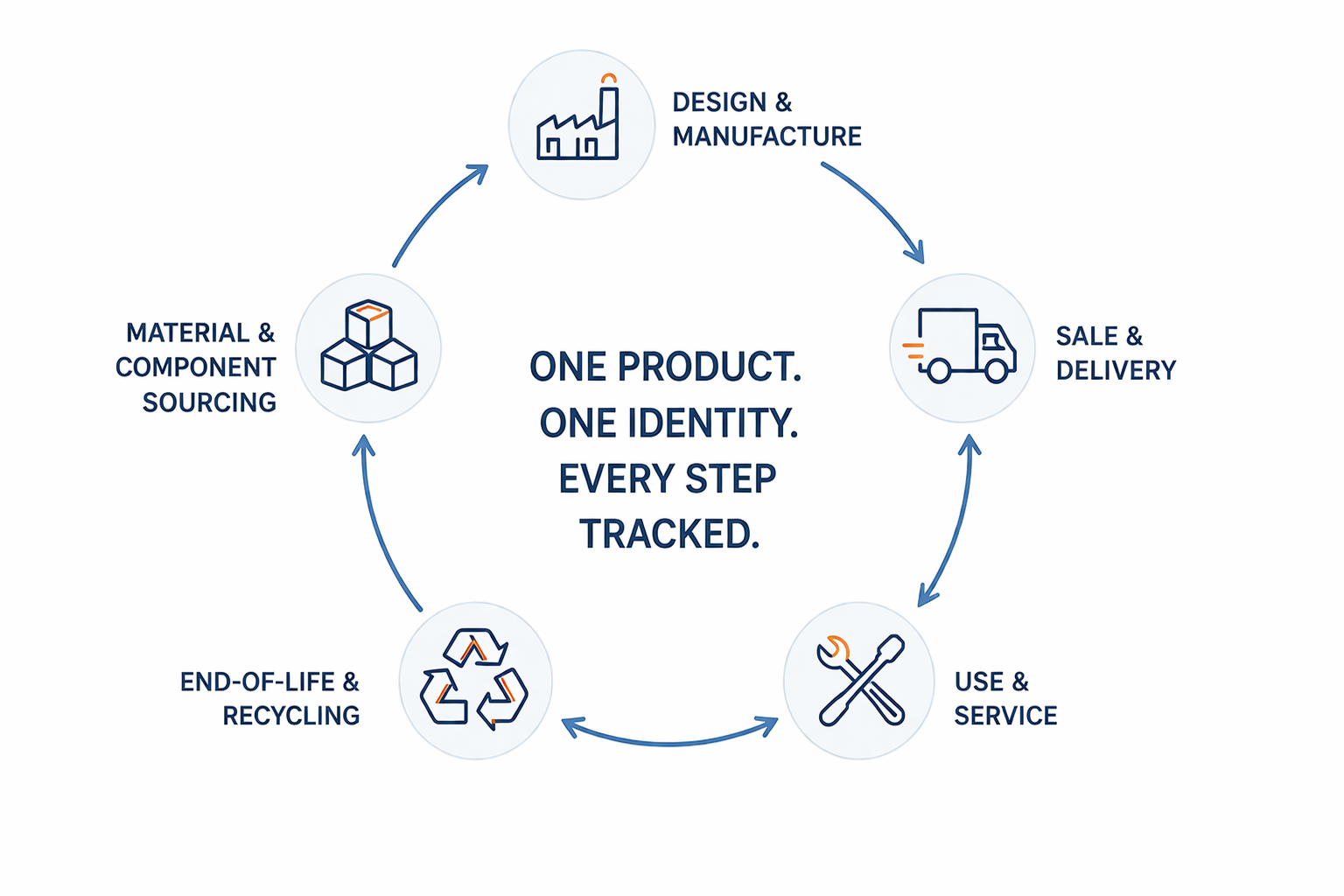
Traditionally, products followed a simple path: Design → Manufacture → Sell → Dispose. Once a product left the factory and reached the customer, visibility largely ended. Manufacturers had limited insight into how the product was used, serviced, repaired, or eventually discarded.
The new model is different. It moves away from a one-time transaction mindset and toward a lifecycle mindset. Products are now expected to be designed for durability, tracked throughout their useful life, supported through repair and maintenance, and handled responsibly at end-of-life through reuse, refurbishment, or recycling.
This shift also raises the bar for transparency. Manufacturers are increasingly expected to provide structured, accessible information about product identity, components, materials, service history, and environmental performance. That information must be available not only internally, but across multiple stakeholders, including operators, service teams, regulators, and, in some cases, customers.
In this new model, a product is not just something that is sold and forgotten. It becomes a long-term asset with a traceable record that continues to create value across its entire lifecycle.
If you want a slightly stronger final sentence, use this instead:
Products are no longer one-time transactions. They are long-term assets with traceable histories, serviceable lifecycles, and growing regulatory expectations.